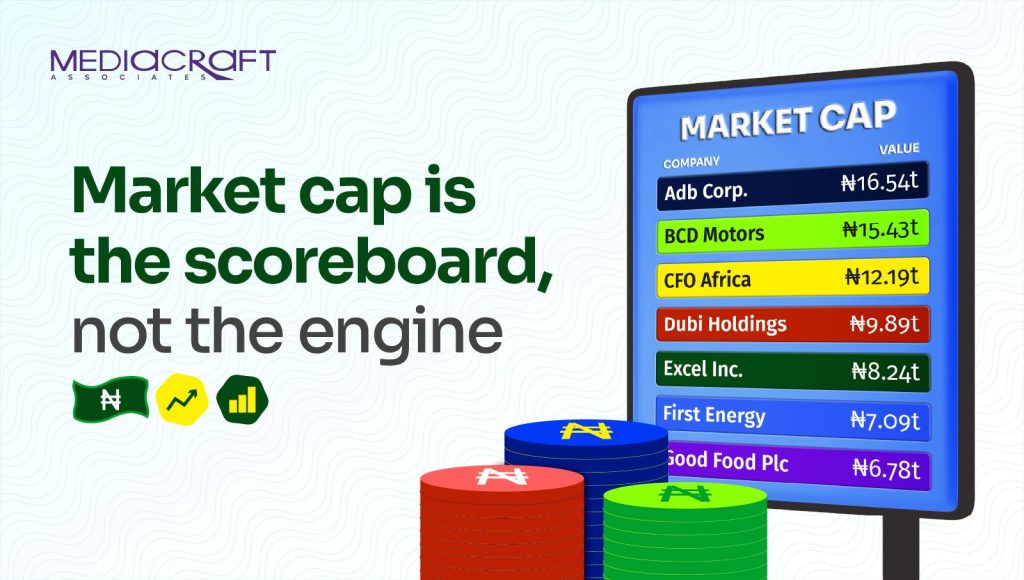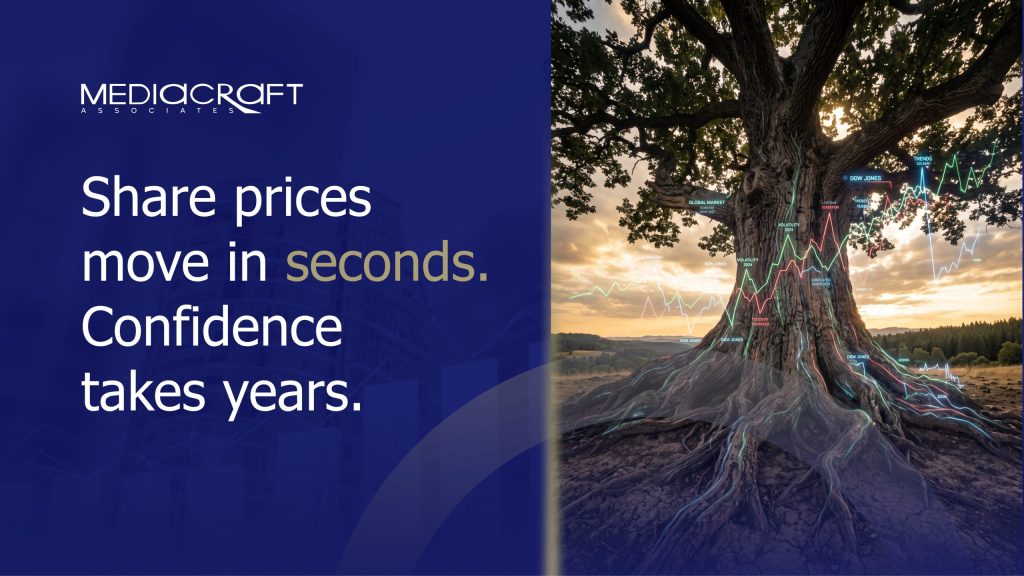
Around the world, millions of shares change hands on stock exchanges every trading day. Prices rise and fall in response to economic news, corporate earnings, policy decisions and shifting investor sentiment. Watch the screens for an hour and it can feel as though this constant motion is the whole story of markets — a restless tide of numbers reacting to whatever happened most recently.
But beneath the daily fluctuations lies a more enduring force, one that rarely announces itself on a ticker. It is the force that determines whether investors stay committed to a company for years or quietly exit at the first sign of uncertainty. It does not move in seconds, and it cannot be read off a price chart. Yet over the long run it shapes outcomes far more decisively than any single day’s trading.
That force is shareholder confidence. And it is neither accidental nor bought overnight.
What Confidence Actually Is
Confidence is painstakingly earned. It is built through decades of transparent leadership, consistent financial performance, sound corporate governance, and an unwavering commitment to creating sustainable value. It is not a feeling that management can manufacture with a good quarter or a polished press release. It is the slow accumulation of evidence — evidence that a company does what it says, reports what is true, and behaves the same way whether or not anyone is watching closely.
This makes confidence fundamentally different from a share price. A price is a snapshot of what the market thinks at a given instant. Confidence is a judgement about character, formed over time. One can be revised in an afternoon; the other is the product of years of consistent conduct. When an investor says they “trust” a company, they are not describing today’s valuation. They are describing an accumulated belief that the people running the business will continue to act responsibly with the capital entrusted to them.
The Asymmetry Worth Sitting With
Here is the uncomfortable part. While a share price may react in seconds, confidence often takes years to build — and it can be lost in a single corporate scandal. Years to build, moments to destroy. That asymmetry is worth sitting with, because it explains a great deal about how the most respected companies behave.
A single episode of misreported earnings, a governance failure kept quiet, a leadership team that spins bad news rather than owning it — any of these can undo a reputation that took a generation to establish. And once broken, that trust is extraordinarily expensive to rebuild, if it can be rebuilt at all. Investors who felt betrayed do not simply return when the numbers improve; the memory of the breach lingers, and with it a discount that can shadow the company for years.
This is precisely why well-governed companies treat transparency not as a box-ticking exercise but as one of their most valuable assets. They understand that every honest disclosure, every candid explanation of a setback, every audited account that holds up to scrutiny is a deposit into a reservoir of trust that cannot be replenished quickly. They protect that reservoir because they know how long it took to fill and how fast it can drain.
Why Investors Are Looking Deeper
Increasingly, investors are paying attention not just to results but to how those results were produced. It is no longer enough to know how much profit a company made. Thoughtful investors want to understand how those profits were generated: whether the governance structures behind them are robust, whether the board provides genuine oversight, and whether management communicates candidly during both prosperous and difficult periods.
The reason is straightforward. Profits generated through sound, repeatable, well-governed processes are far more likely to continue than profits that appear suddenly and cannot be clearly explained. A company that is forthcoming when things go wrong is signalling something valuable — that it will not hide the next problem either. Candour in a hard quarter tells an investor more about management’s integrity than confidence in an easy one ever could.
Why This Matters for Everyday Participation
For markets seeking to deepen everyday participation, all of this matters enormously. When ordinary people commit personal savings in the hope of long-term wealth creation, they are placing a great deal of faith in institutions they may never see up close. Audited accounts, regular disclosures and consistent behaviour are not mere formalities to such investors. They are the evidence — often the only evidence — that management deserves their trust.
A first-time investor cannot walk into the boardroom or inspect the ledgers personally. What they can rely on is the paper trail of accountability that good governance produces: financial statements verified by independent auditors, timely updates through good times and bad, and a track record of management saying what it will do and then doing it. These mechanisms exist precisely so that people without inside access can still make informed decisions. They are how confidence becomes possible for the many, not just the well-connected few.
Understood this way, transparency and governance are not bureaucratic overhead. They are the foundation on which broad, healthy market participation is built. A market where ordinary savers can trust the information in front of them is a market they are willing to enter and remain in. A market where they cannot is one they will approach with suspicion, or avoid altogether.
Confidence rarely makes the headlines that daily price moves do. It is quiet, cumulative and easy to take for granted — until it is gone. Yet it may be the single most underrated force in long-term investing. It is what turns a collection of transactions into a lasting relationship between a company and its owners, and what allows patient investors to stay the course through the inevitable periods of uncertainty.